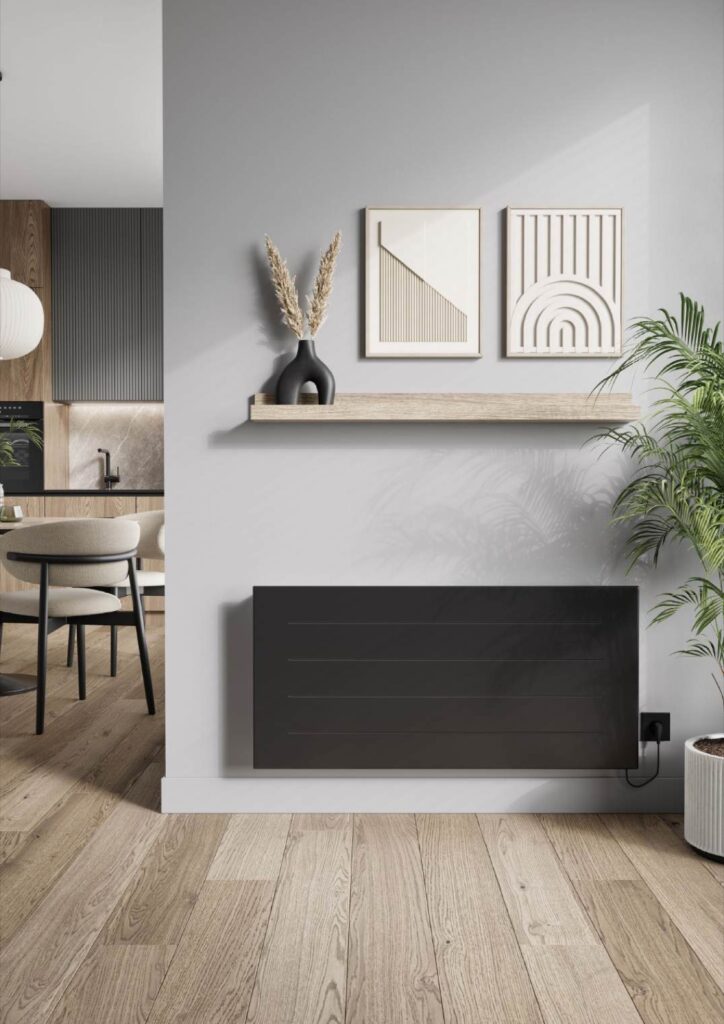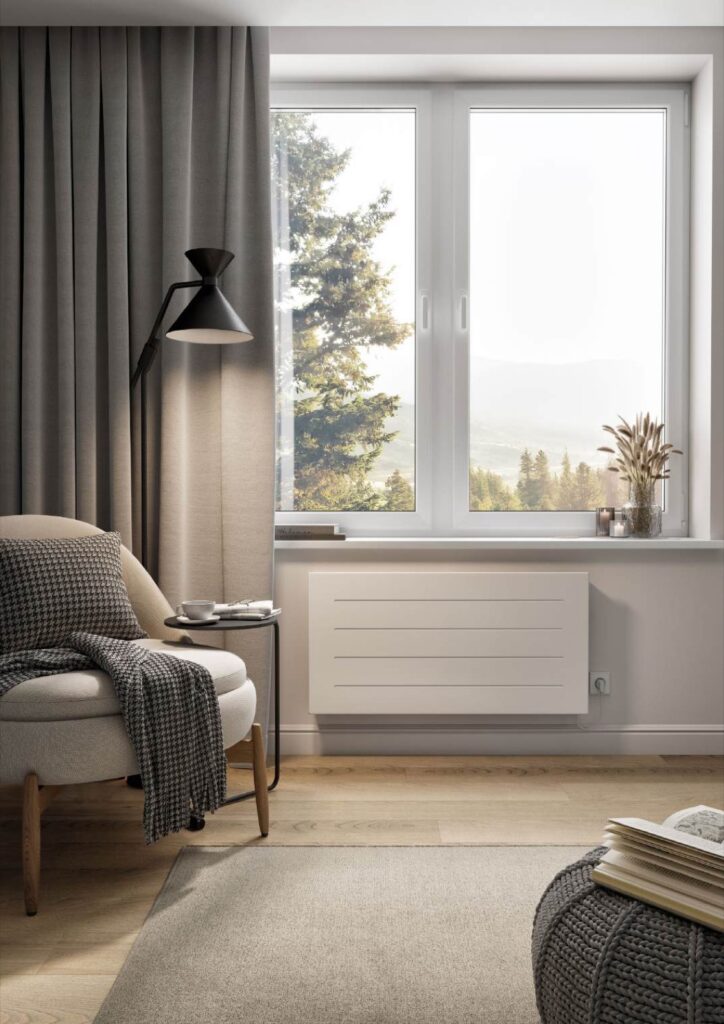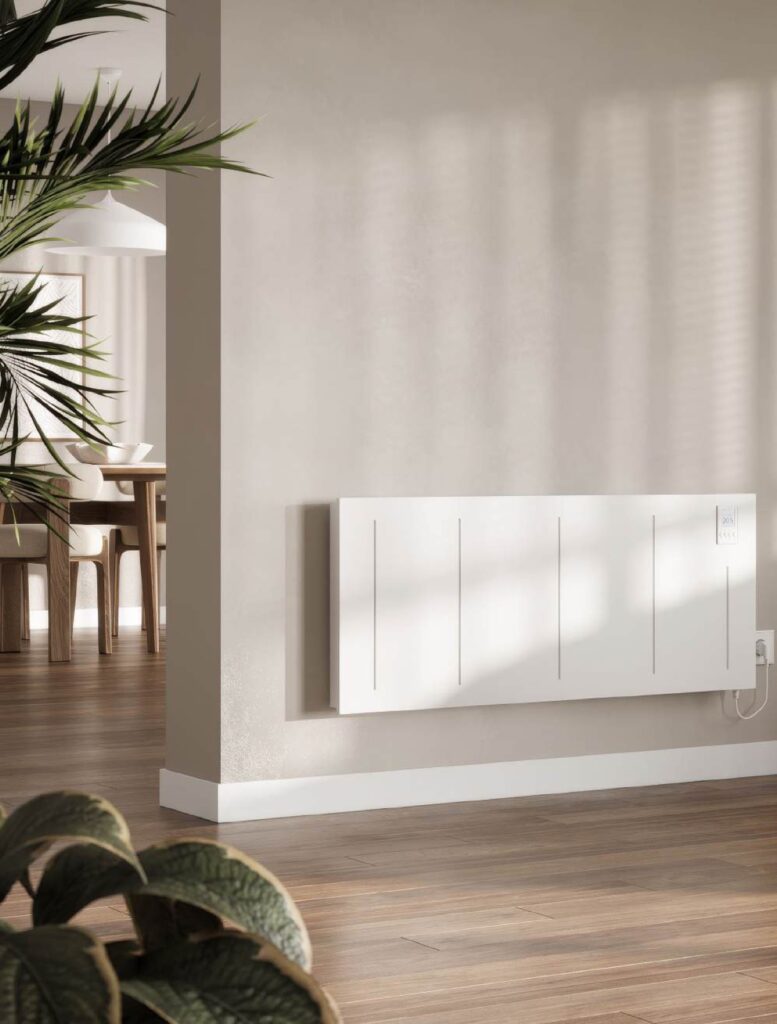

Most advice about saving on heating is about turning things down. This isn’t that. Electric radiators are already converting all the electricity they draw into heat in the room — there’s no flue, no pipework and no boiler losing any of it on the way. So the savings aren’t in the equipment. They’re in how much of your house you heat, and when.
Four things decide what you pay. Three of them you can change today.
Heat the rooms you’re using
This is the big one, and it’s the thing whole-house heating can’t do.
A boiler-and-radiator system is one circuit. When the heating comes on, the spare bedroom warms up whether anyone’s in it or not. Electric radiators are controlled one at a time, so the rooms you don’t use don’t cost you anything.
Think about your own day. If there are two of you in a three-bedroom house, you might genuinely need two rooms warm on a weekday afternoon. Heating four is the waste — not the temperature you’ve set.
Start by turning the unused rooms down rather than off. A room held at 12–14°C stays dry and takes far less energy to bring up to comfortable than one that’s gone properly cold.
Match the times to your day
A radTherm radiator draws full power while it’s warming a room up, then only for around 12 to 15 minutes an hour to hold the temperature there. Most of the cost is in the warm-up.
Which means the schedule matters more than the thermostat setting. A radiator that comes on an hour before you need the room and holds it is cheaper than one running all evening at a lower temperature.
Two things worth doing:
- Set each room to its own schedule. The kitchen in the morning, the sitting room from late afternoon, the bedroom for an hour before bed. Not all three, all evening.
- Use the away setting when you’re out for the day. Dropping everything to a holding temperature is better than switching off and reheating a cold house.
Get the temperature right, then stop adjusting it
Every degree costs. Going from 21°C to 20°C across a whole house is a real reduction, and most people can’t tell.
What doesn’t help is turning a radiator up to warm a room faster. It won’t — it heats at the same rate either way, you’ll just overshoot and open a window. Set the temperature you actually want and let the schedule do the work.
Check your tariff
This is the one people miss, and it’s where switching from storage heaters changes things.
Storage heaters need a two-rate tariff like Economy 7 to make sense, because they can only charge up overnight. That cheap night rate comes with a higher daytime rate — and if you use any electricity during the day, you pay it.
radTherm radiators heat on demand, so they don’t need a special tariff. That means you can go back to a single-rate tariff and compare suppliers on one number instead of two. For a lot of households coming off Economy 7, that’s a meaningful change on its own, separate from the heating.
If you’re still on Economy 7 with storage heaters, it’s worth reading why storage heaters cost what they cost before you change anything.
The one thing you can’t change
Your house. Room size, ceiling height, insulation and glazing all decide how much heat a room needs and how long it holds it. A well-insulated bungalow and a solid-wall Victorian terrace will never cost the same to heat, whatever’s on the wall.
That’s why we don’t quote one running-cost figure for everyone. At the free survey Neil measures every room and works out what your home would actually use — which is a different question from what a heater costs per hour.
Want the numbers for your own home? The free survey gives you a written quotation and a running-cost estimate based on your rooms. Book a free survey.